
Electrical Safety Devices
Electrical safety in residential homes has evolved quickly over the past 50 years. Many changes in power requirements, distribution panel location, and wire types have occurred to improve safety and to provide more power for modern homes. We now have way more electrical devices being used than ever conceived. Not only do we consume more power, but we also increase our risk of over drawing circuits and potentially causing electrical fires.
In this article we are only going to drill down on two specific safety devices found in homes since the 1970’s. Those are Arc Fault Circuit Interrupters and Ground Fault Circuit Interrupters.
Breakers
Let’s take a minute to look at circuit breakers first. Breakers in the electrical panels in our homes were starting to being installed as early as the 1930’s but were not prevalent until the 1950’s. Fuses had been used prior to breakers. A breaker trips or a fuse pops when enough of an overdraw of power occurs on a circuit.
Ground Fault Circuit Interrupter (GFCI)
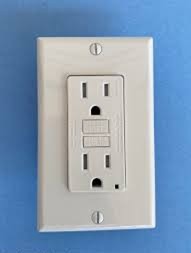
Breakers were a great safety improvement which have saved countless lives however electrocutions were still happening even when breakers or fuses were installed. When a person was in contact with a ground and an electrical source, they could still be shocked because the overdraw threshold of the breaker was not reached or was not reached quickly enough to prevent it. Electronic circuitry was evolving and by the 1970’s a new safety device, the GFCI was developed. This new device had the ability to sense as little as 4-6 milliamps of electricity not correctly flowing through the circuit and the device would trip assuming someone was being shocked. Many know these devices as the “popped button” on the receptacle when the hair dryer was being used.
Arc Fault Circuit Interrupter (AFCI)
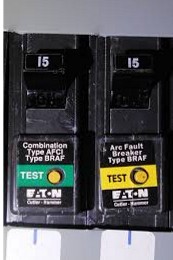
As with breakers GFCI devices were a great safety improvement however something else was occurring that started causing great concern, house fires. Many of the house fires were being traced back to electrical sources. When wiring, switches, receptacles, and other electrical devices age contact points start to degrade and arcs can occur when switching, plugging in or turning them on. Modern technology found an answer to this as well. The AFCI breaker has integrated circuitry added to the breakers in your electrical panel. These devices sense arcs or sparks in the circuit and trip the breaker. The breaker itself still trips as designed when there are overloads that occur as well. In 1999 AFCI breaker requirements started to hit the code books to protect sleeping areas first and by 2020 nearly all 110-volt circuits in the electrical panel required protection.
Troubleshooting
GFCI’s protect all wet areas in a home and will shut off power to all receptacles connected in the same circuit downstream of the device. If a GFCI trips it is typically located on a receptacle but can also be installed as an integrated circuit on a breaker in the electric panel. These are easily reset by pressing the reset button on the device.
If an AFCI breaker is tripped the whole electrical circuit loses power so lighting or receptacles in a bedroom or multiple rooms may have no power. This requires a breaker reset in the electric panel. You must first put the breaker in the off position and then turn it back on.
Safety
If any GFCI or AFCI device does not reset, it could be a short circuit or another more severe electrical issue and should be addressed by an electrician.