
Dishwasher Backflow Prevention
History
Did you know that the first dishwasher design was patented in 1886? Dishwashers have come a long way since that early design and did not start to hit the consumer market until the 1960’s. Now, nearly 70% of homes are using them. At the time, bacterial safety in these new era machines was less of a concern than convenience. However, by 1974 the Safe Drinking Water Act was established by congress to protect users from bacterial health concerns and back flow prevention of the dirty drain water became a requirement.
Current Backflow Configurations
High Loop
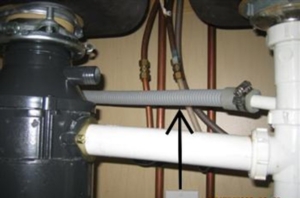
The high loop takes the drain line from the dishwasher, to the highest point under the sink cabinet. This creates a loop at the top of the bend which is attached at the highest point. Then the line is connected to the plumbing drain system below the level of the sink. The idea is that when there is sufficient pressure from the dishwasher pump to push water up past the high loop a separation of air will help prevent drawing the contaminated water back into the dishwasher.


Air Gap
A dishwasher air gap physically separates the drain line from the water supply. The air gap stops the backflow, similar to the way a P-trap works. Although a high loop is effective, it’s usually not the best option. With a high loop setup, it’s still possible for dirty water to flow back into the water supply if a vacuum is created because nothing physically prevents the crossflow.


An Alternative Attachment
Food waste and debris being drained from the dishwasher combined with microbial contaminants found in the garbage disposal elevate the need for a functional drainage method that will prevent cross contamination. When there are double sinks installed the dishwasher drain line, installed to either an air gap or a high loop, can be connected to the tailpiece of the sink opposite the sink with the garbage disposal installed avoiding the additional contamination.
Troubleshooting
When an odor is present inside the dishwasher it is a pretty sure bet that something is not working properly in the back flow protection of the unit. Age and other factors can play a role. But more often than not, the backflow as currently configured is not providing the service necessary to maintain sanitary conditions. An odor inside the dishwasher is the notable result. This is an indication of unhealthy conditions that need to be remedied for health and safety in the home.
For more information, please contact us at 520-462-8844 or click here to schedule a home inspection.